
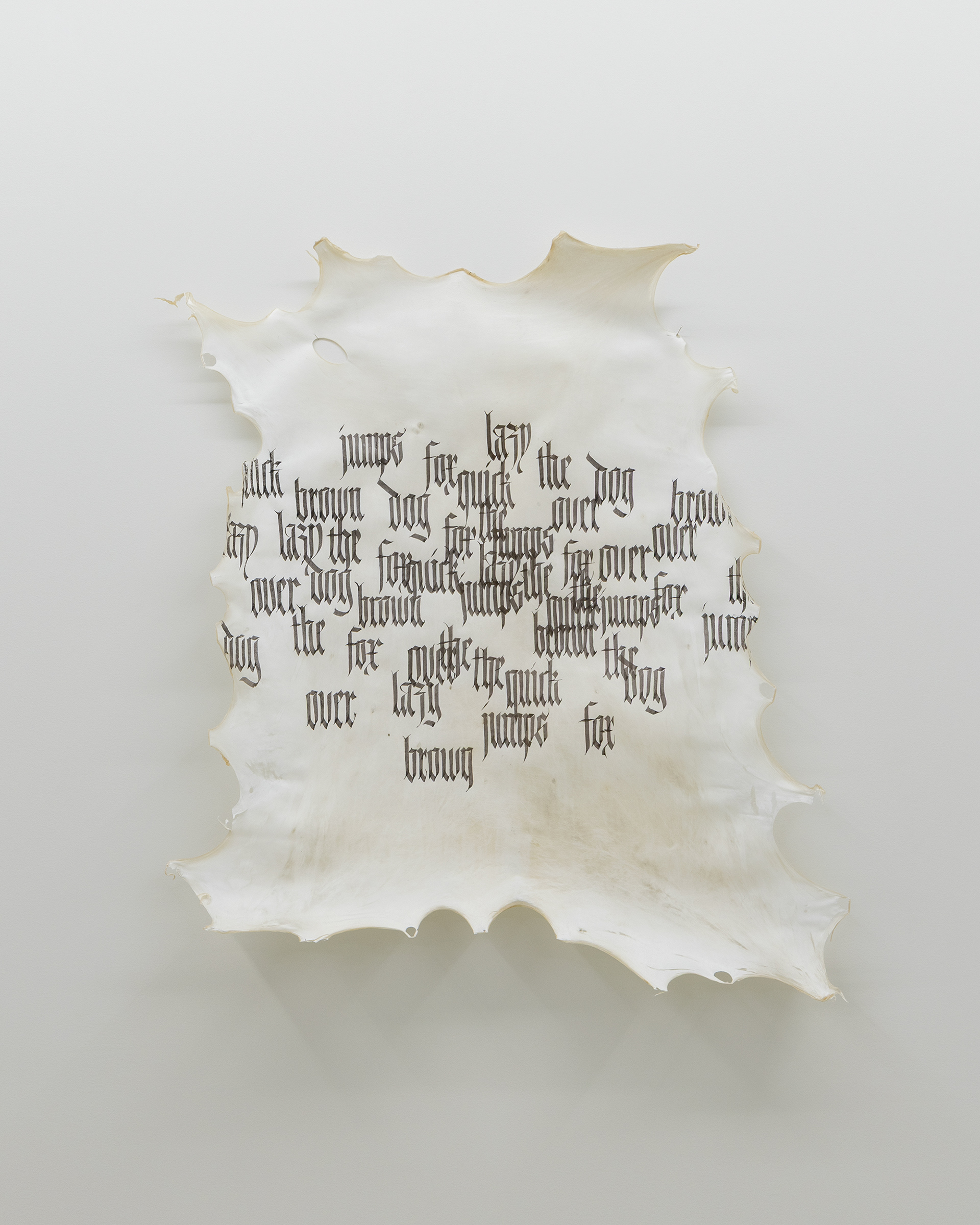
MIKITYPE|Ink on Parchment
2026.2.19–3.14
開廊: 火–土 14:00–19:00 / 休廊: 日・月
Taos Gallery Tokyo (六本木)
東京都港区元麻布3-10-1-3F
Contact: contact@taostokyo.jp
2026.2.19–3.14
開廊: 火–土 14:00–19:00 / 休廊: 日・月
Taos Gallery Tokyo (六本木)
東京都港区元麻布3-10-1-3F
Contact: contact@taostokyo.jp
MIKITYPE | Ink on Parchment
February 19–March 14, 2026
Hours: Tue–Sat, 14:00–19:00 / Closed: Sun–Mon
Taos Gallery Tokyo (Roppongi)
3-10-1-3F Motoazabu, Minato-ku, Tokyo
Contact: contact@taostokyo.jp
ARTIST STATEMENT
Ink on Parchment
羊皮紙 Parchment は、中世ヨーロッパの写本において重要な支持体であった。羊や山羊、仔牛の皮から作られる羊皮紙は、エジプトからの輸入に頼っていたパピルスに比べて耐久性に優れていたことから西洋世界において広く普及した。
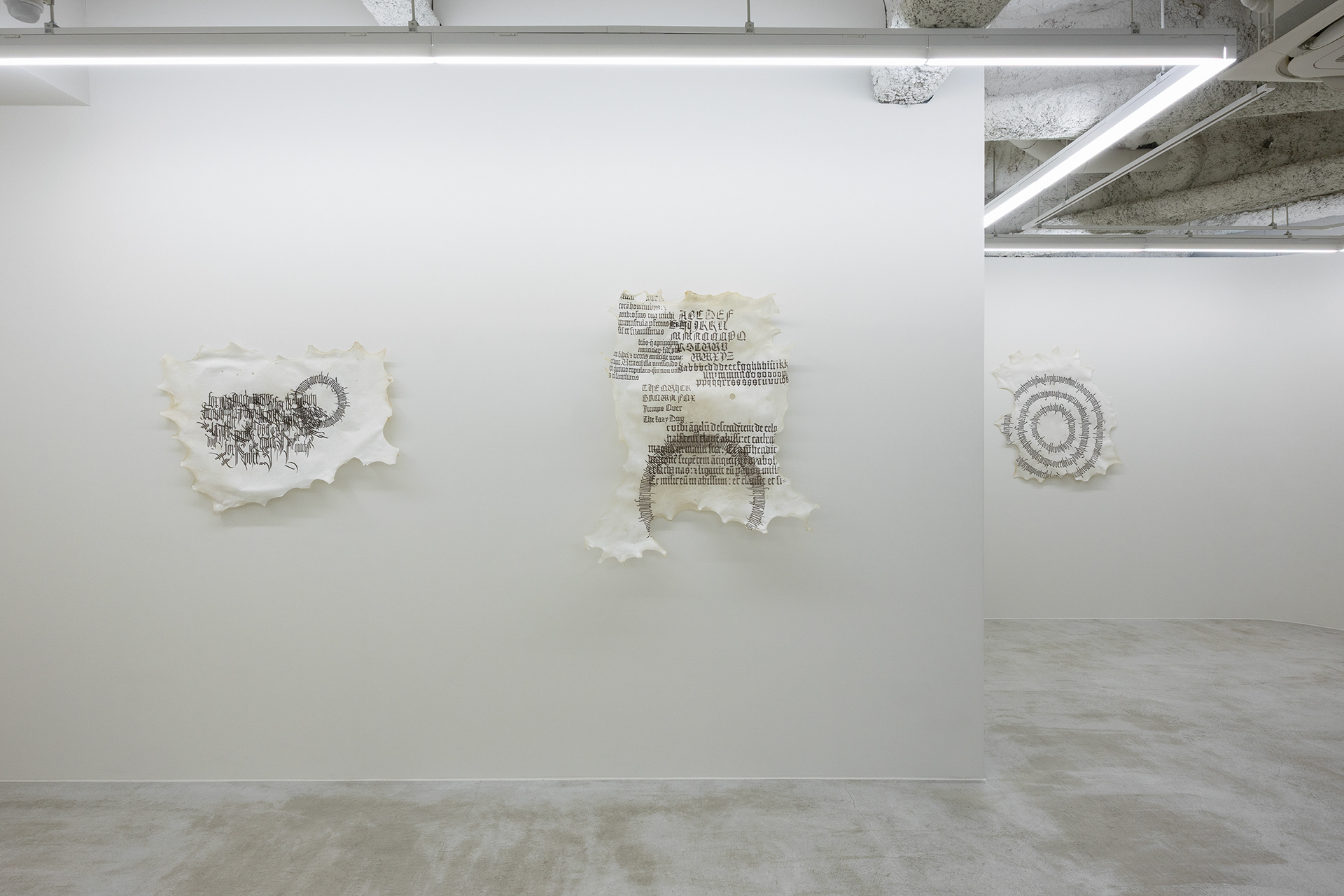
本展で使用している羊皮紙は、カワダシュウジ氏によって制作された、害獣として捕獲された鹿の皮を素材とするものである。現在、日本では年間約70万頭の鹿が捕獲されている一方で、皮革としての利用はほとんど行われていない。
北海道で森林の研究に携わっていた祖父のもと、植林や森林管理の現場に触れてきた経験から、鹿の存在とそれが及ぼす生態系への影響は、私にとって身近な現実であった。捕獲後に十分活用されてこなかった動物資源を、記録と表現の基盤として捉え直している。
限られた羊皮紙を効率的に使用する必要性の中で、文字の密度や垂直性を強調した造形として形成されていった書体がブラックレターである。支持体の物理的条件と書写実践に結びついたこの書体を用いることで、写本文化における文字と素材の関係を参照し、それを現在において可視化する。
MIKITYPE
Ink on Parchment
Parchment was an essential support in the production of manuscripts in medieval Europe. Made from the skins of sheep, goats, and calves, parchment proved more durable than papyrus, which depended on imports from Egypt, and consequently came into widespread use throughout the Western world.
The parchment used in this exhibition is made from deer skins processed by Shuji Kawada, sourced from animals captured as part of wildlife management. In present-day Japan, approximately 700,000 deer are captured annually, yet their use as leather remains extremely limited.
Having grown up under the influence of a grandfather engaged in forest research in Hokkaido, and through experiences in afforestation and forest management, the presence of deer and their impact on ecosystems became a tangible reality for me. This work reconsiders animal resources that have largely gone unused after capture, repositioning them as a foundation for recording and expression.
Blackletter is a script that developed under the necessity of using costly and limited parchment efficiently, resulting in letterforms characterized by high density and pronounced verticality. By employing this script—closely bound to the physical conditions of its support and the practices of scribal writing—this work refers to the relationship between script and material within manuscript culture, making it visible in the present.
MIKITYPE
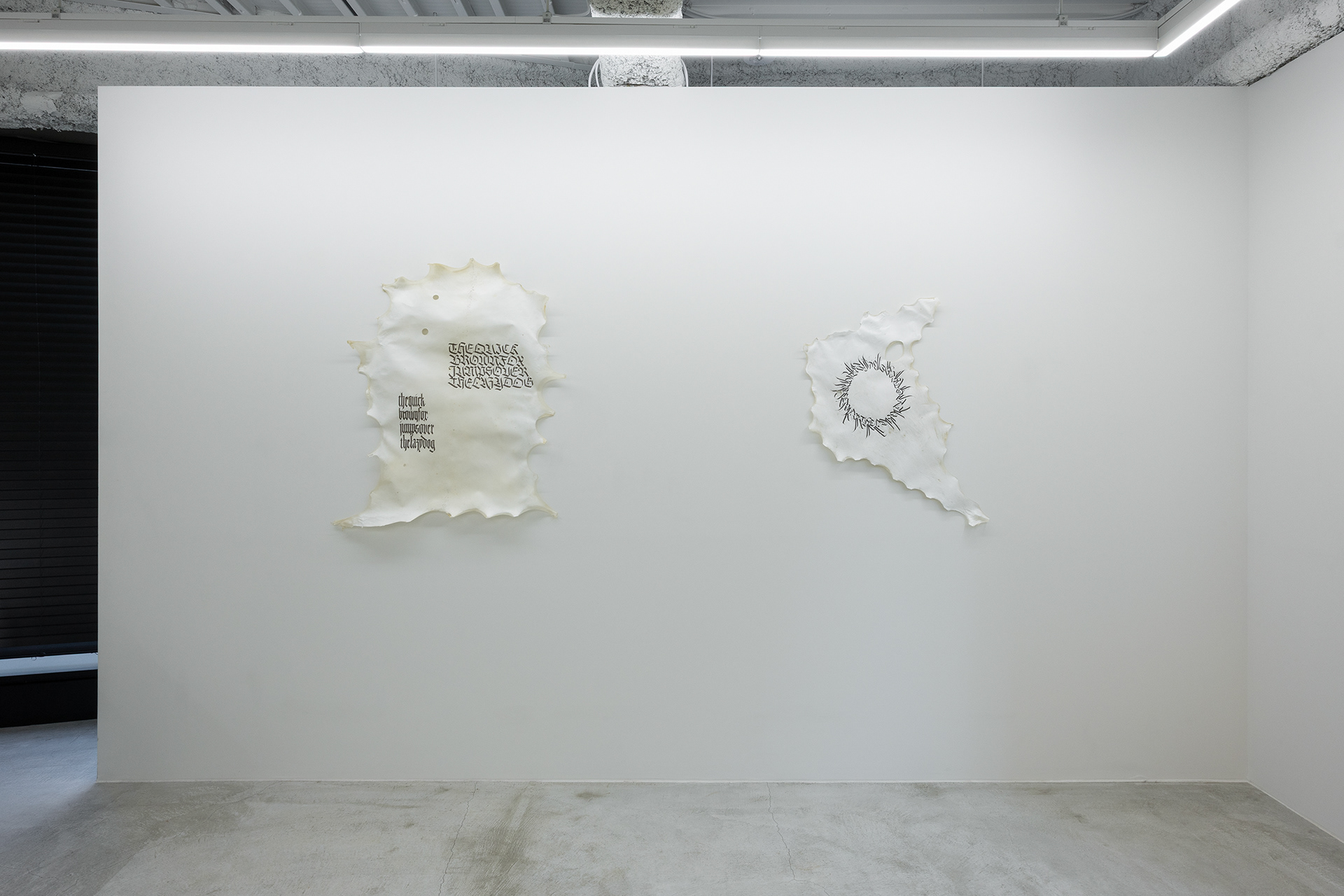
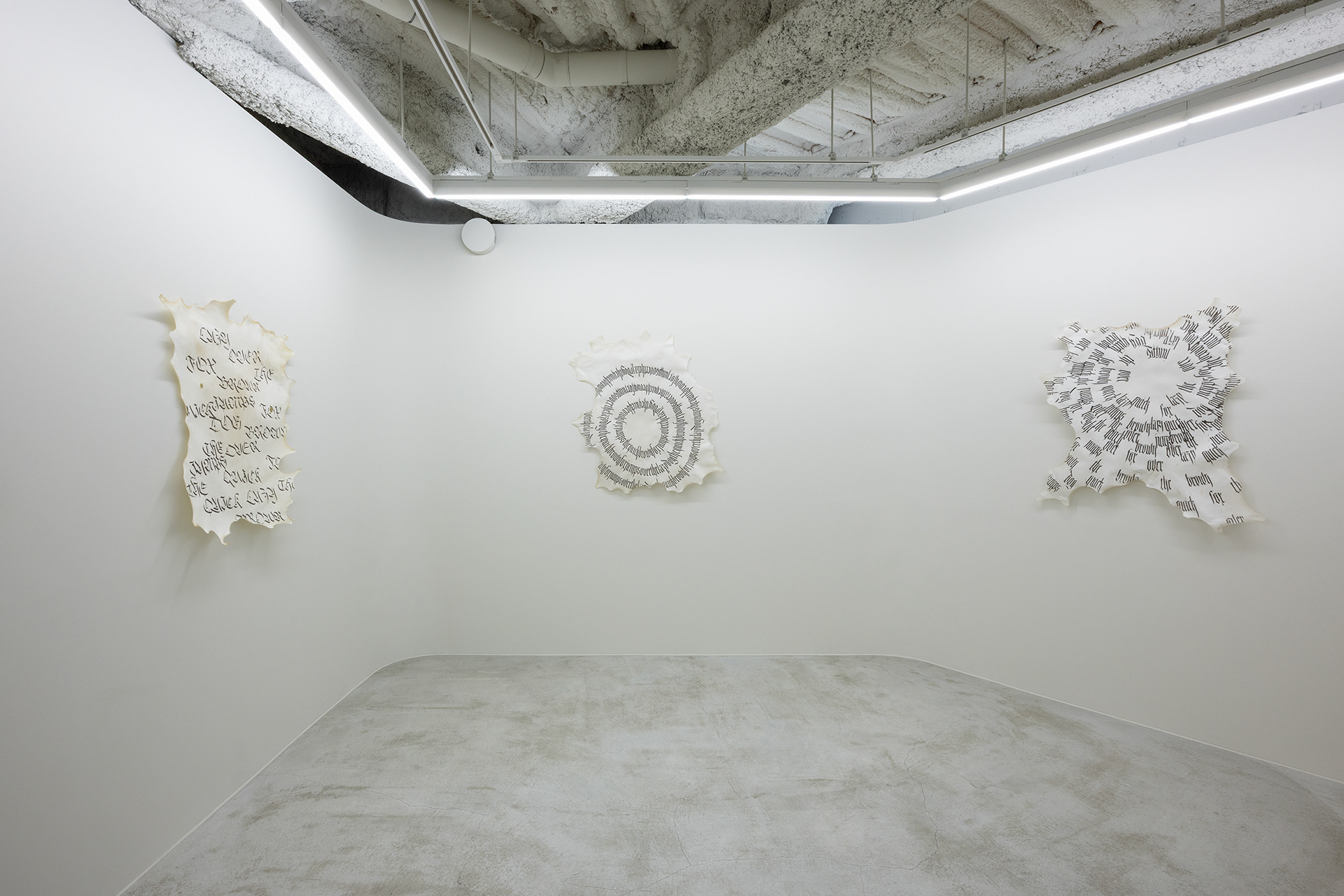
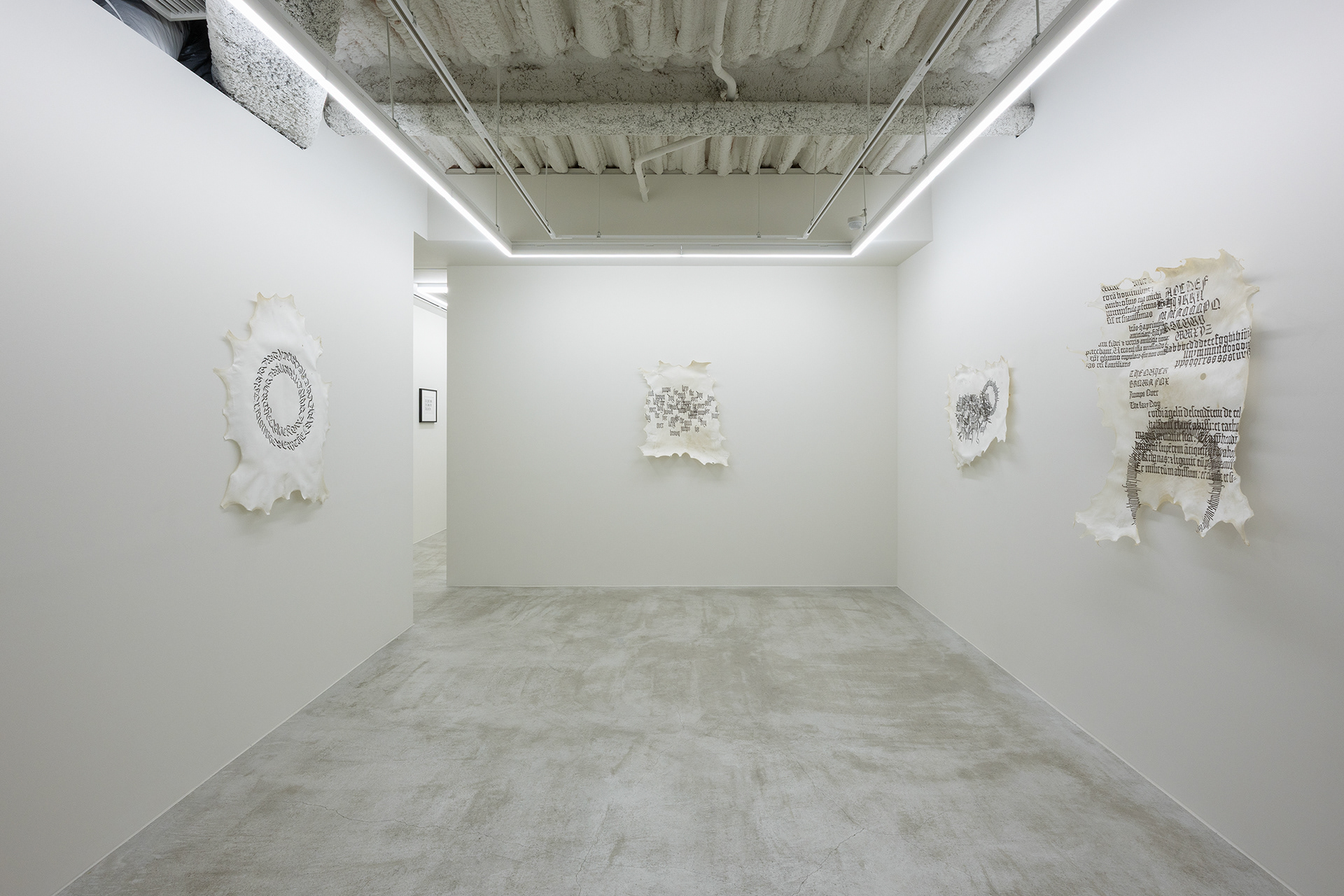
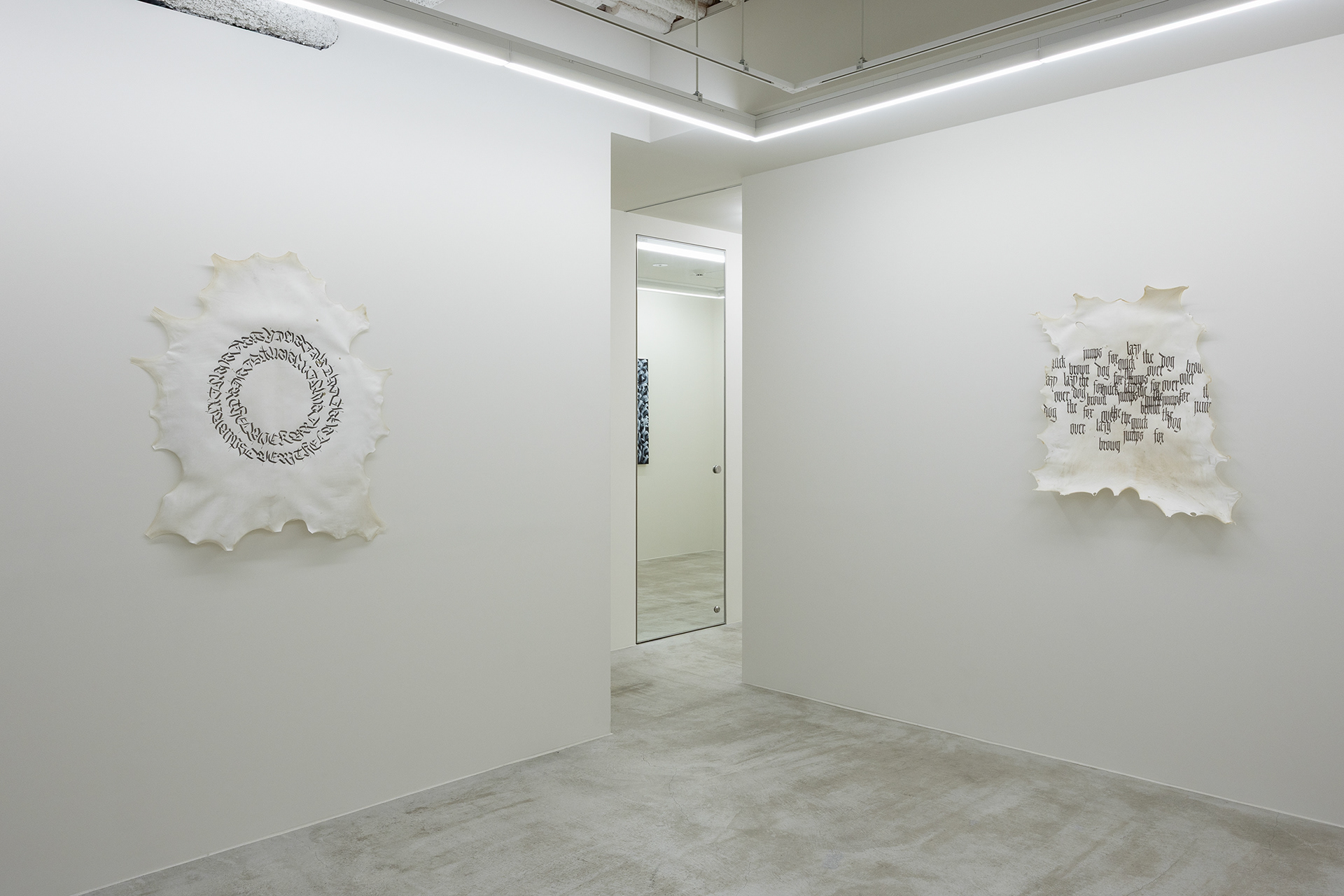
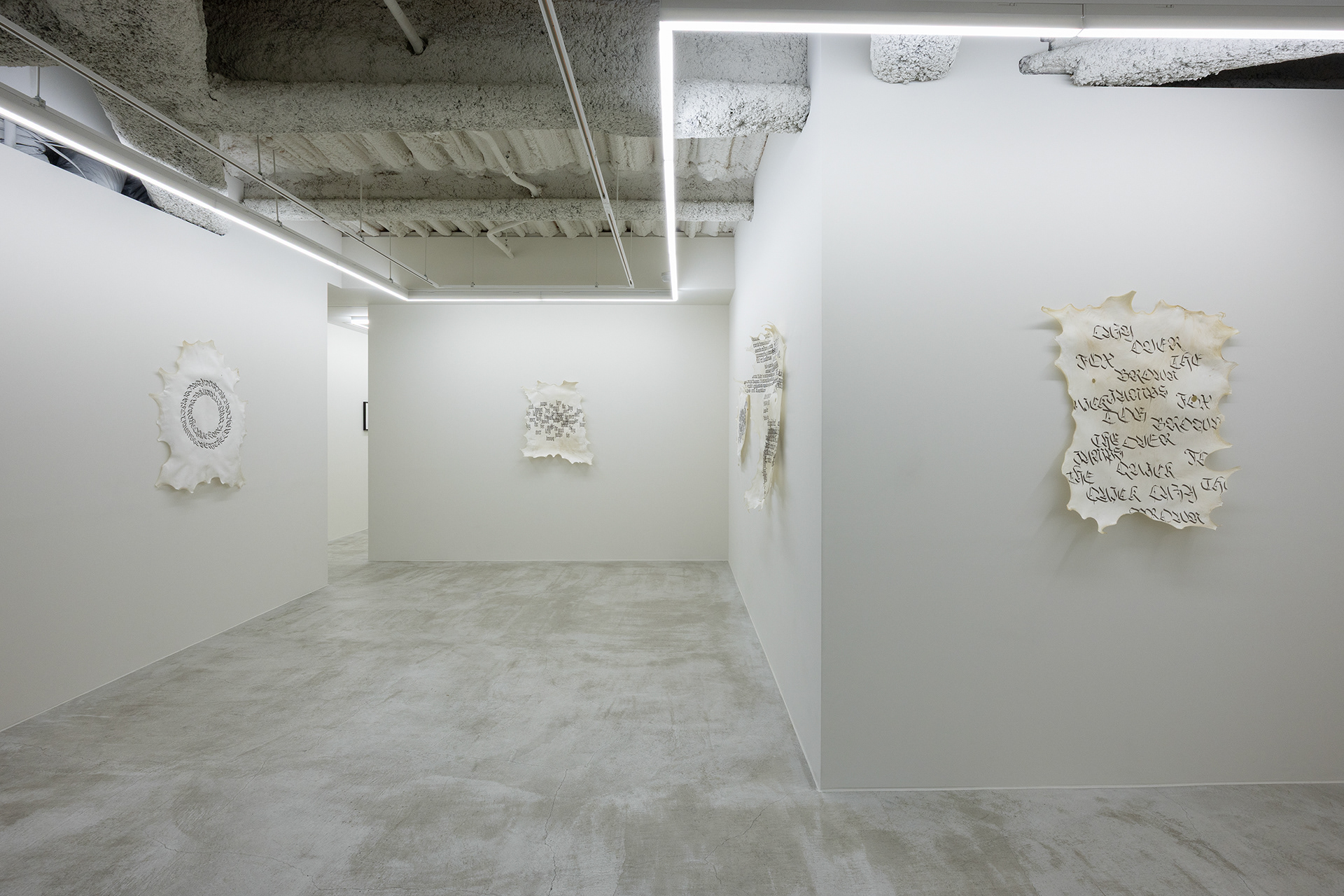
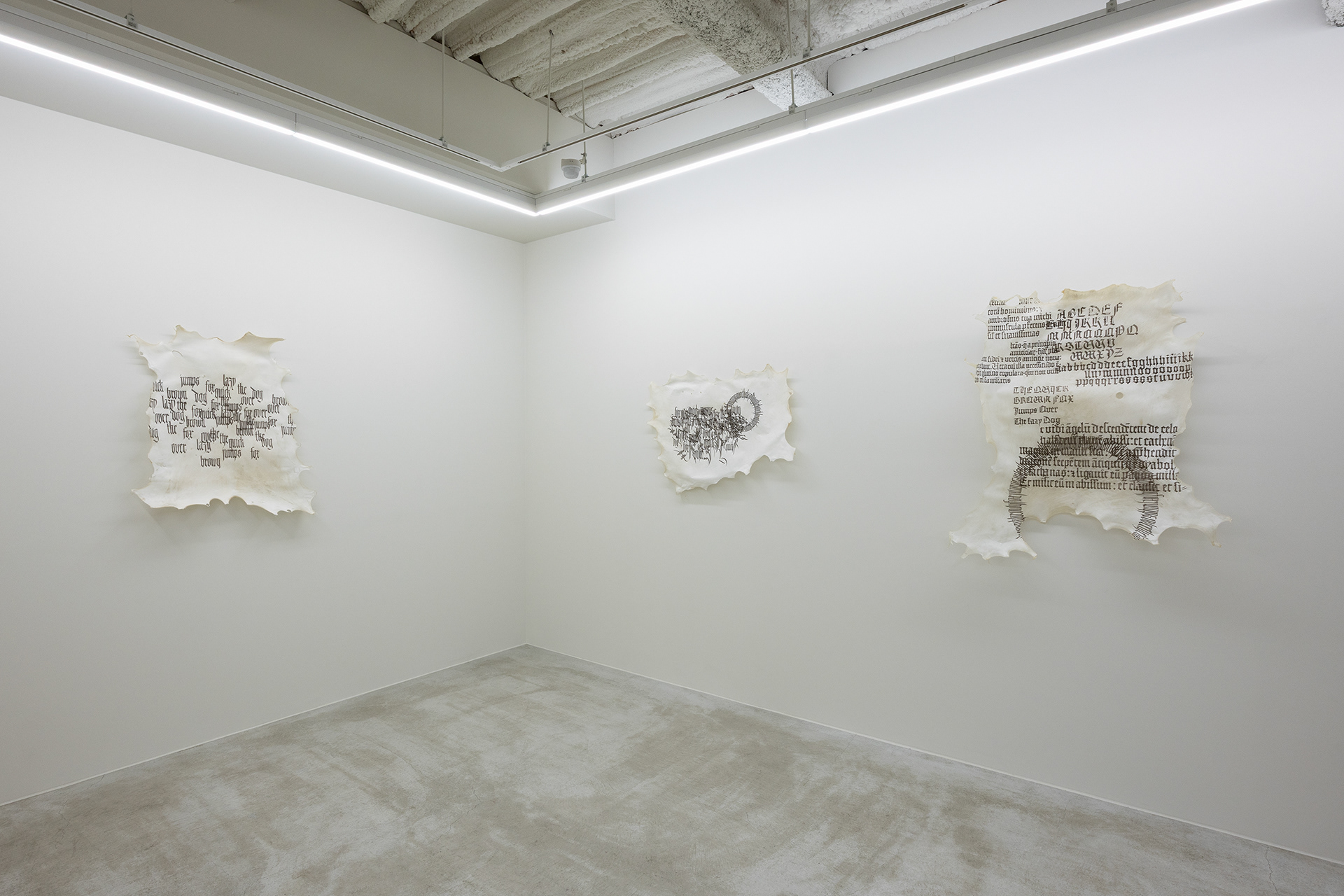
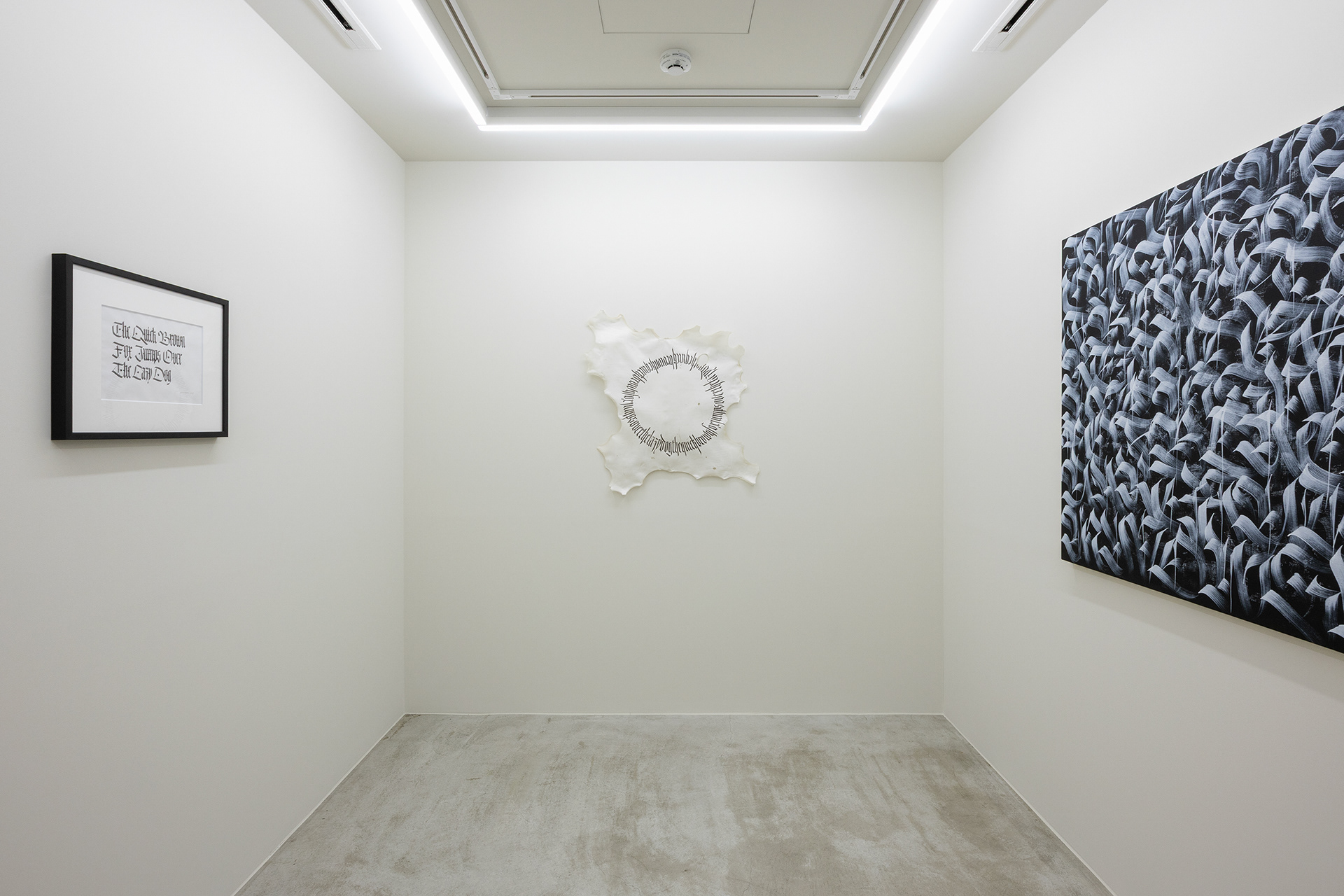
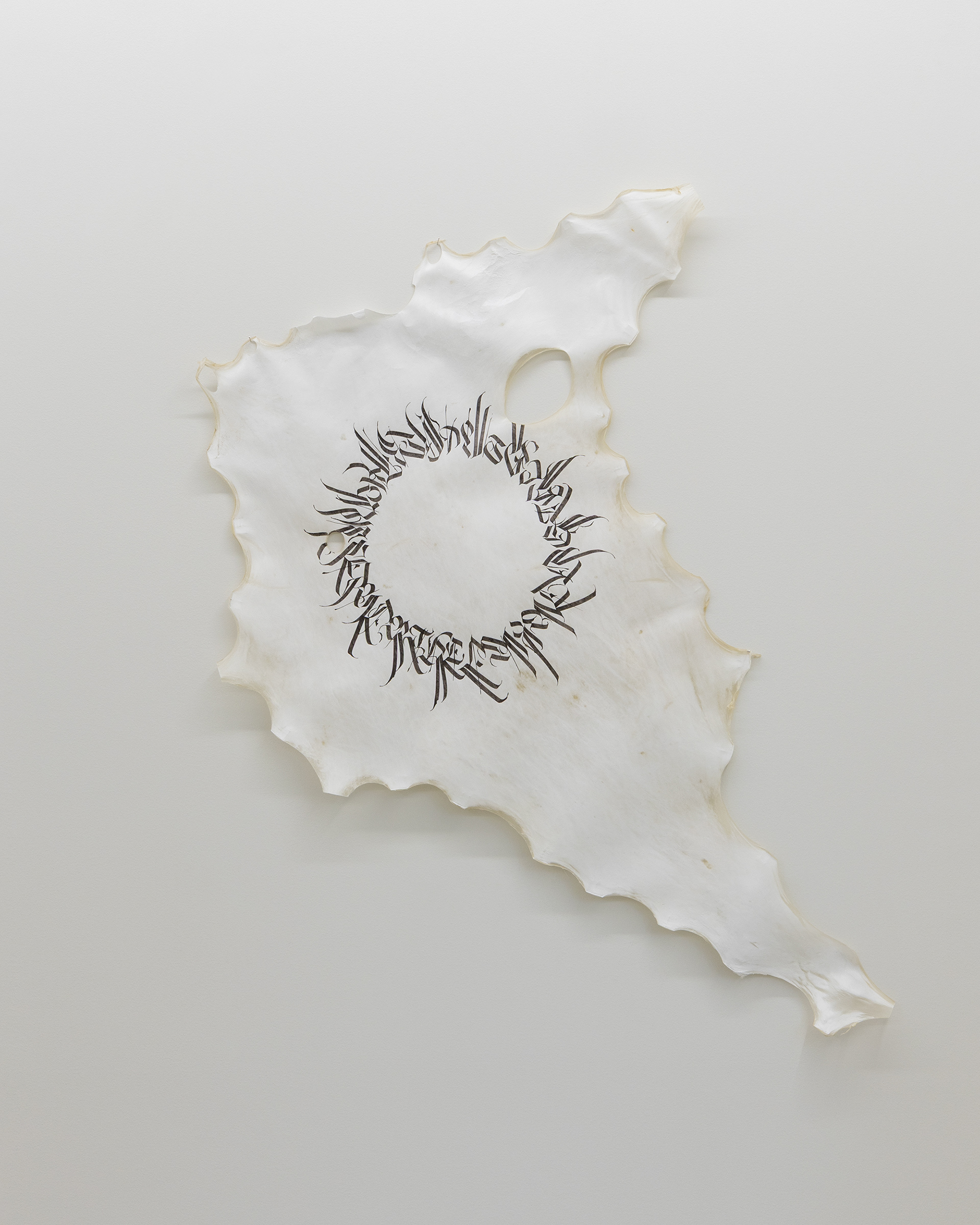
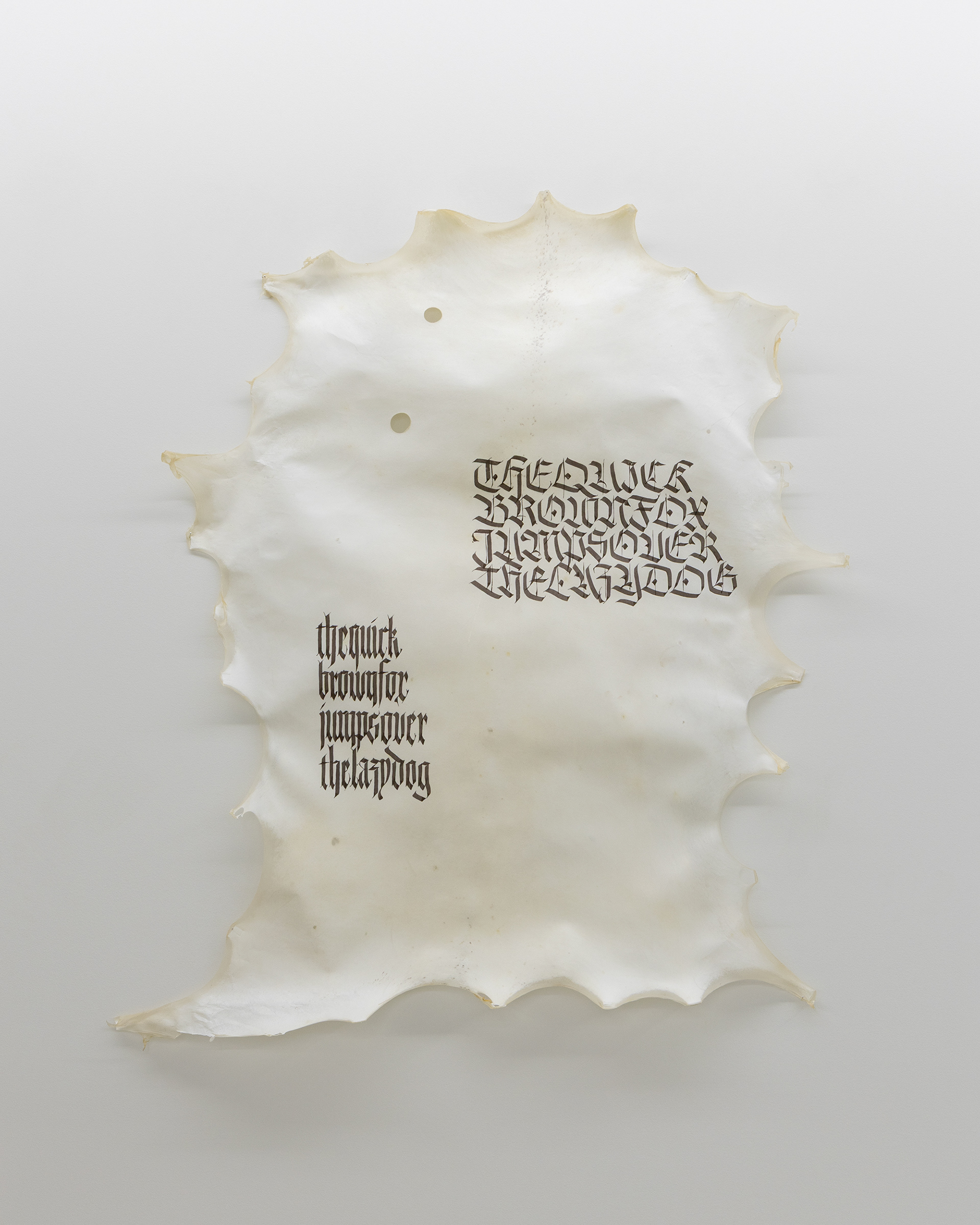
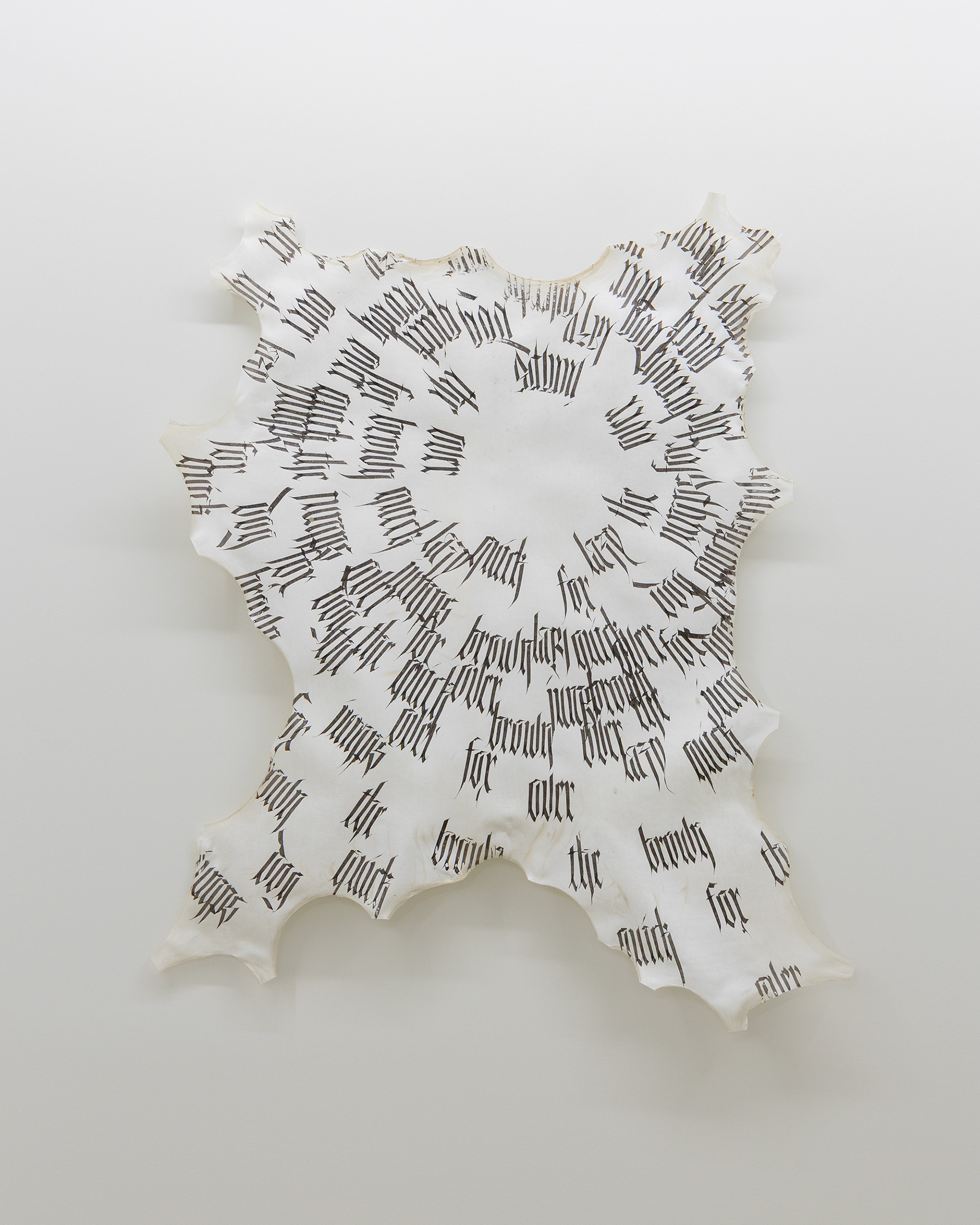
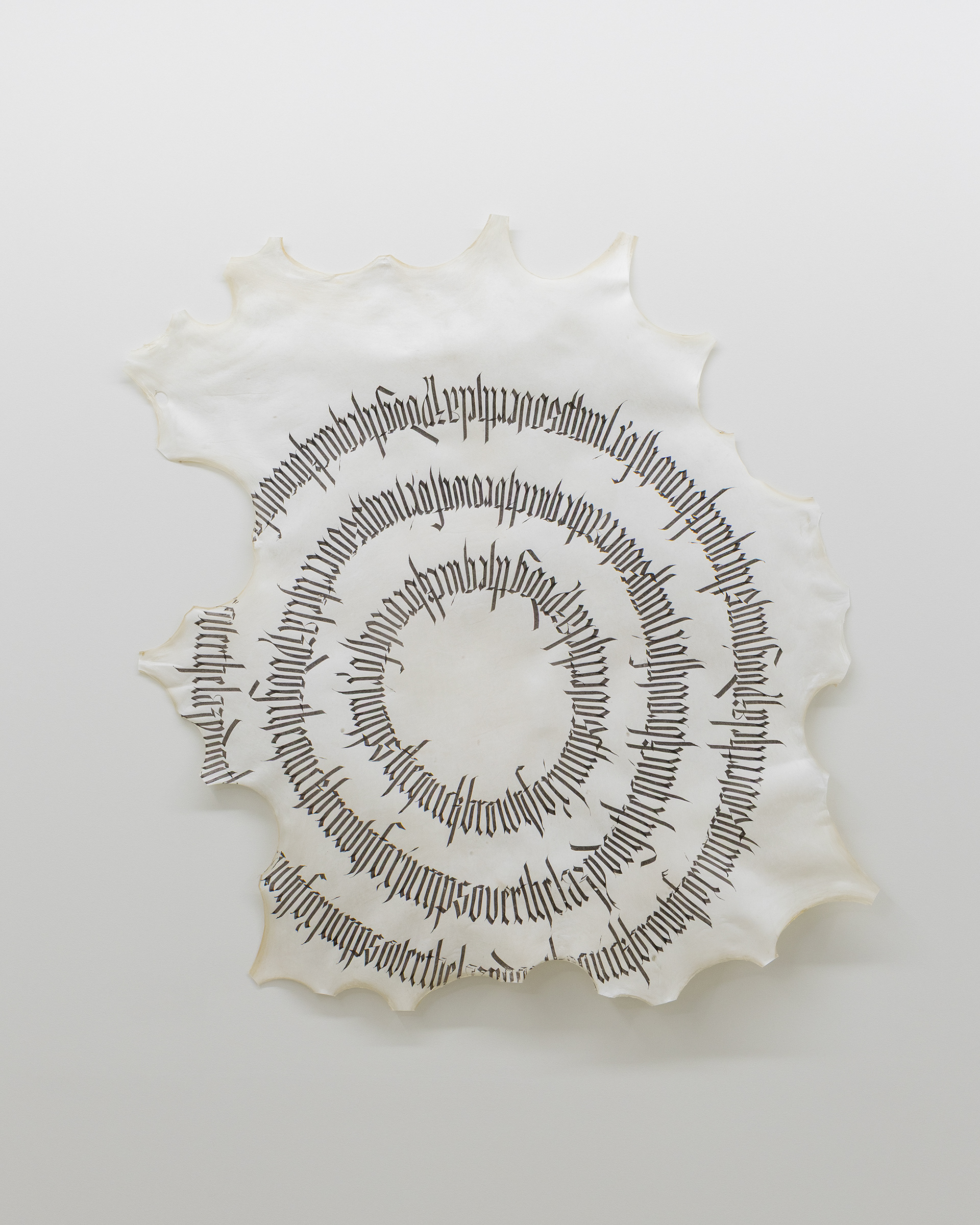
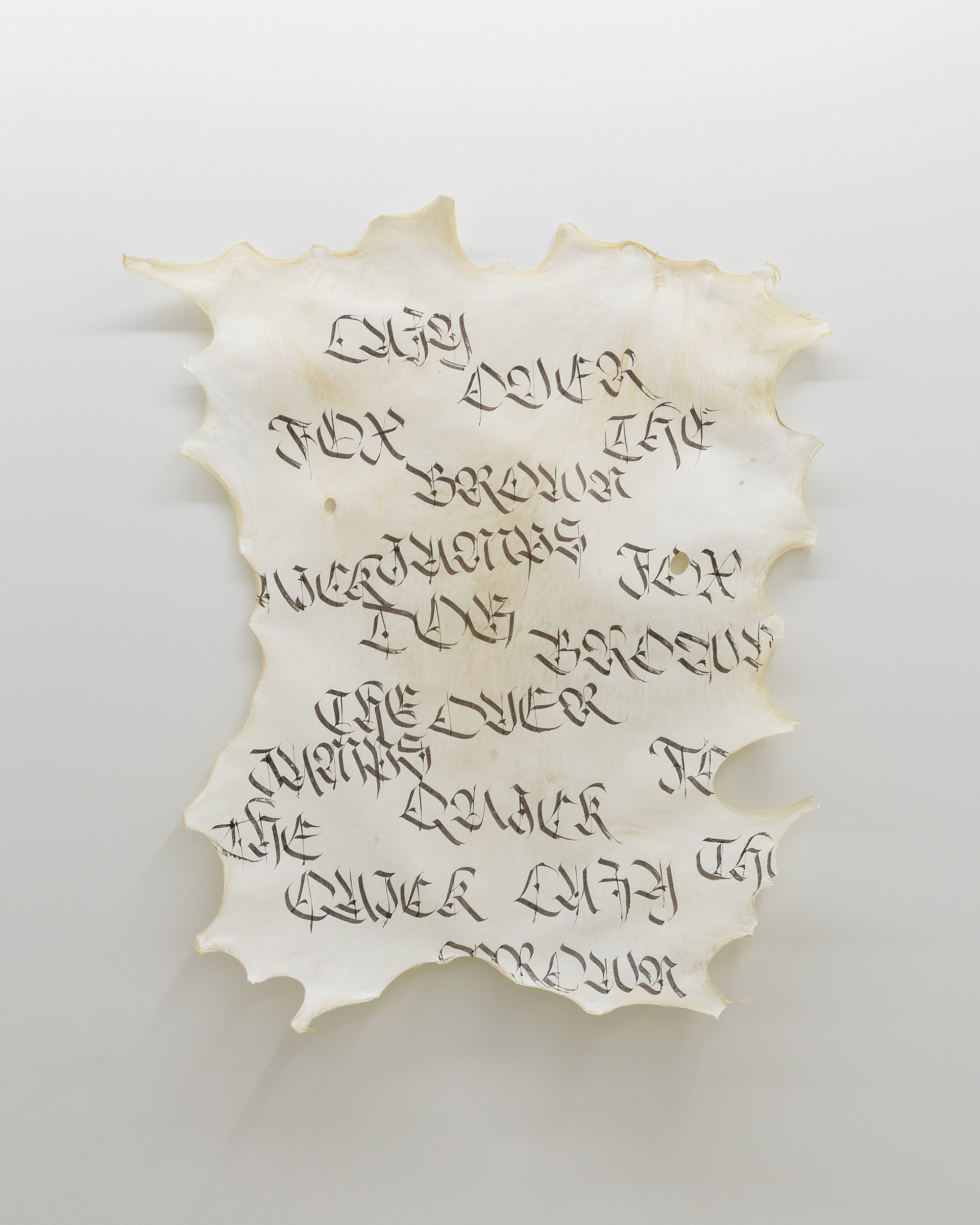
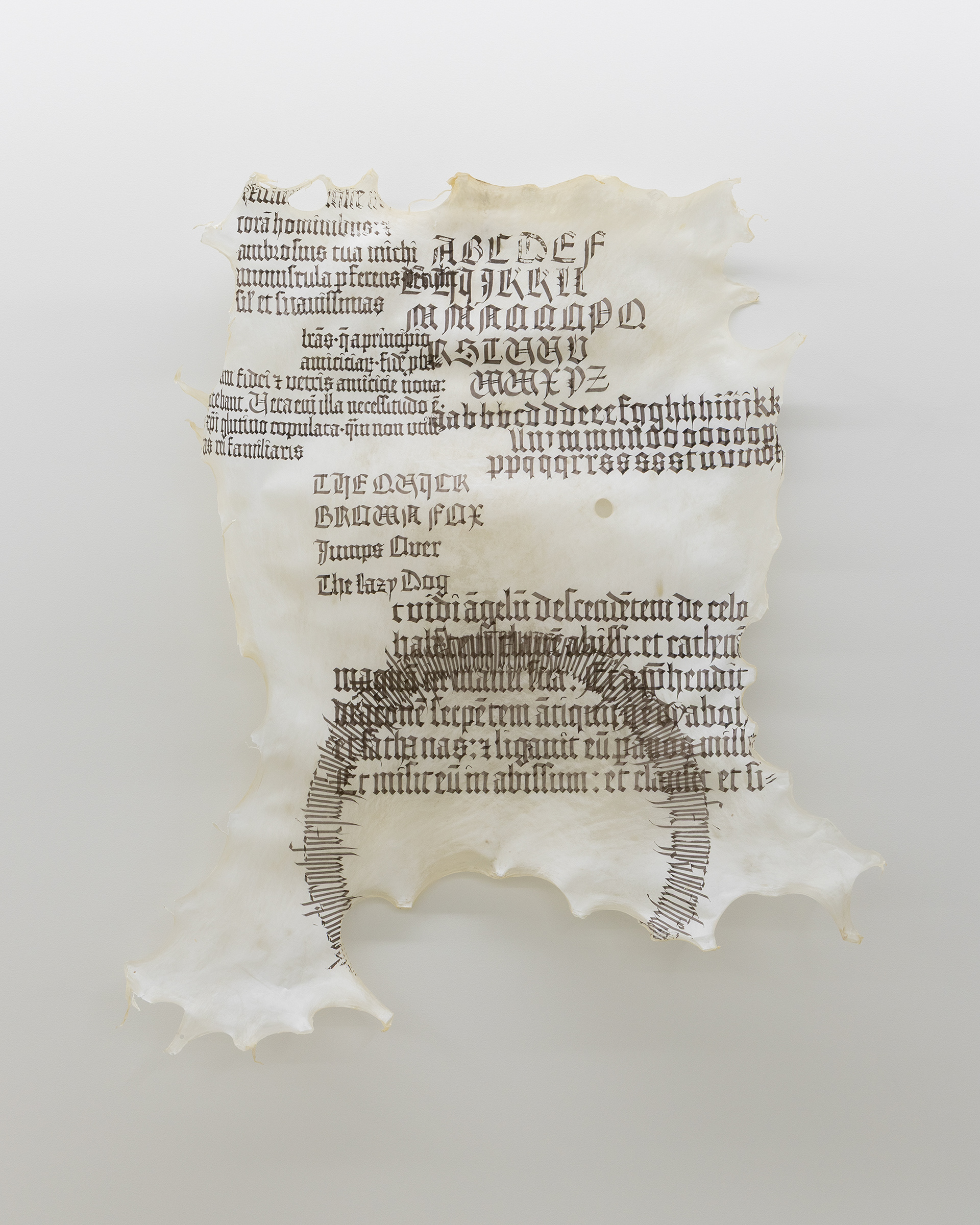
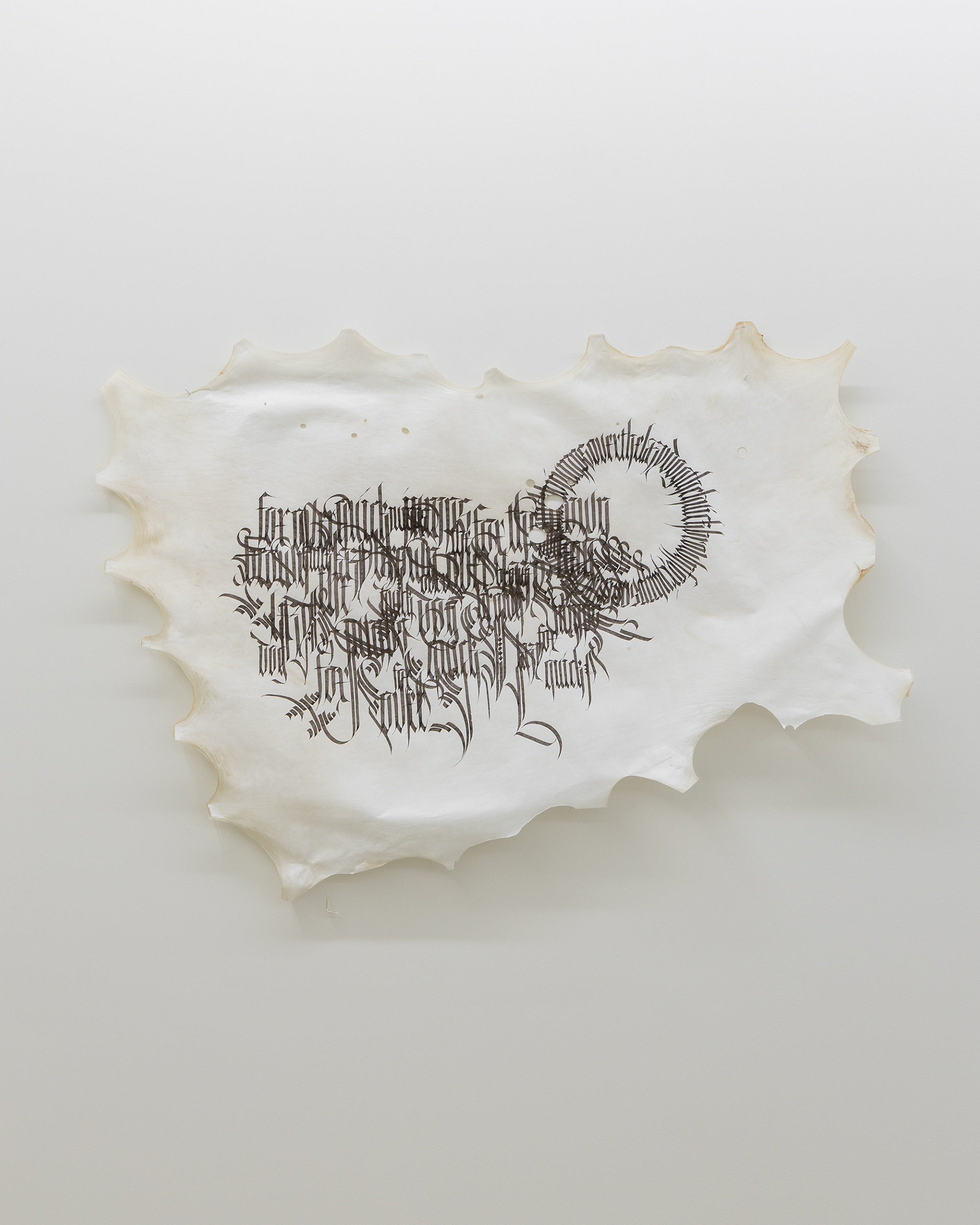
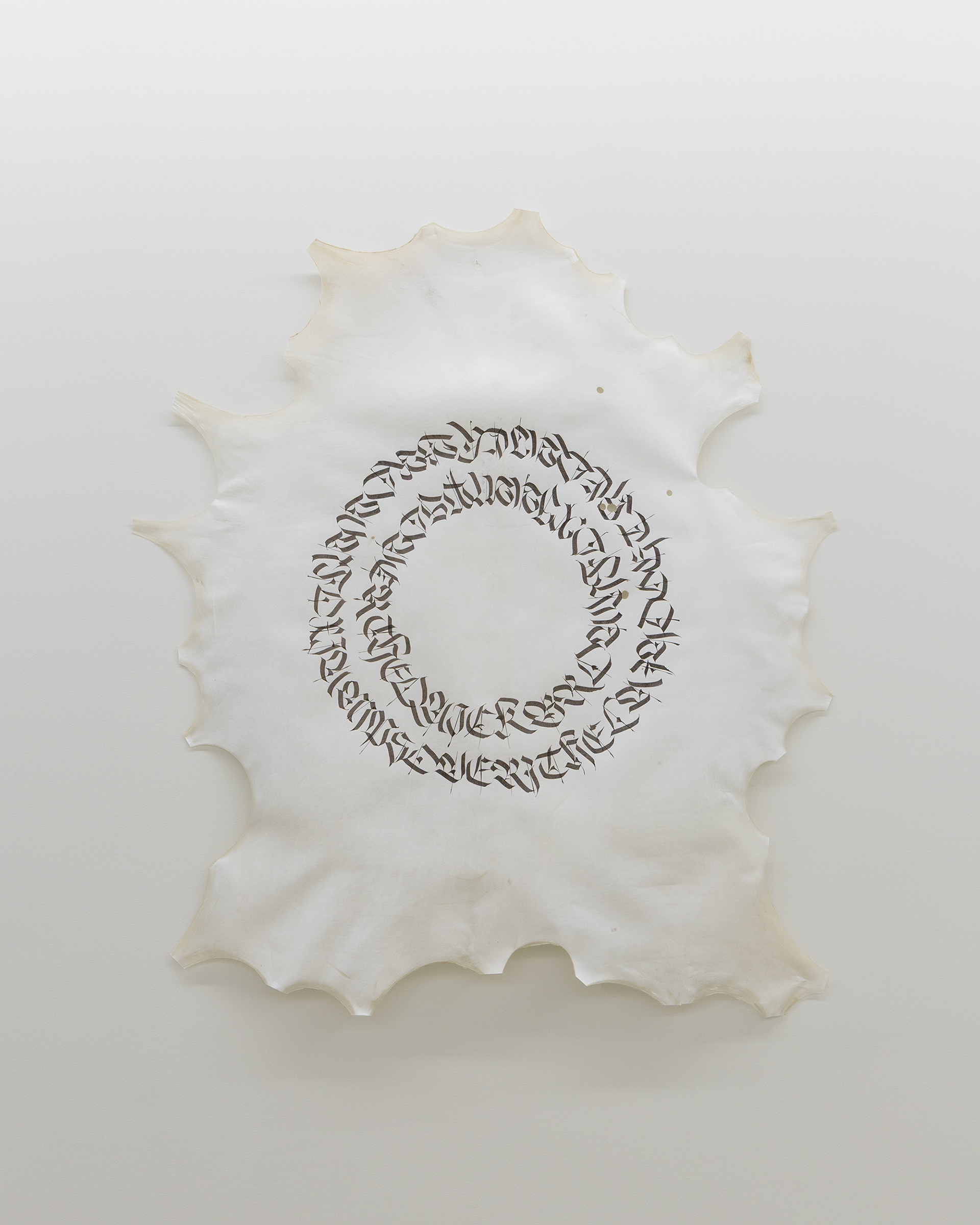
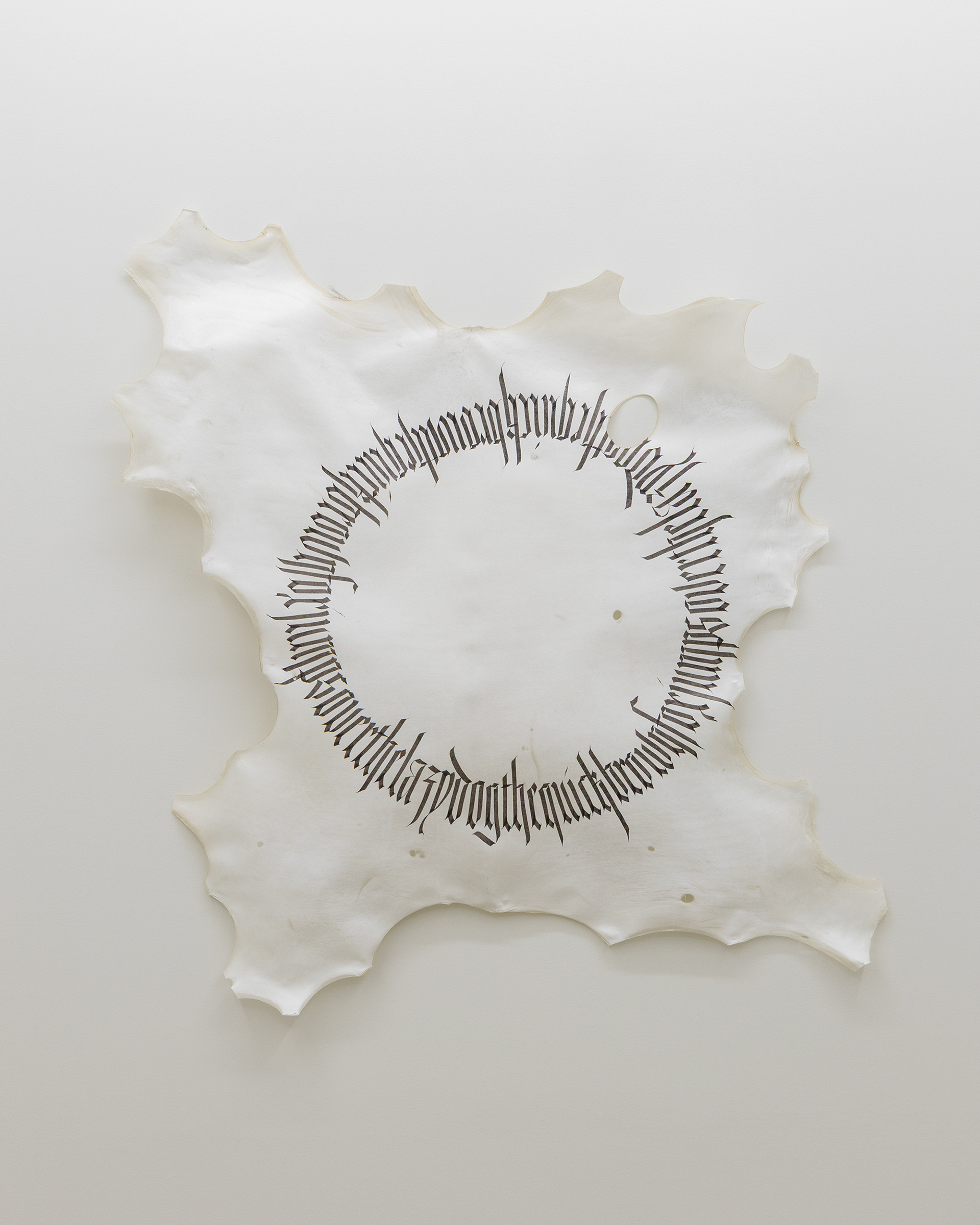
Photo Kohei Omachi